




 Traffic Hub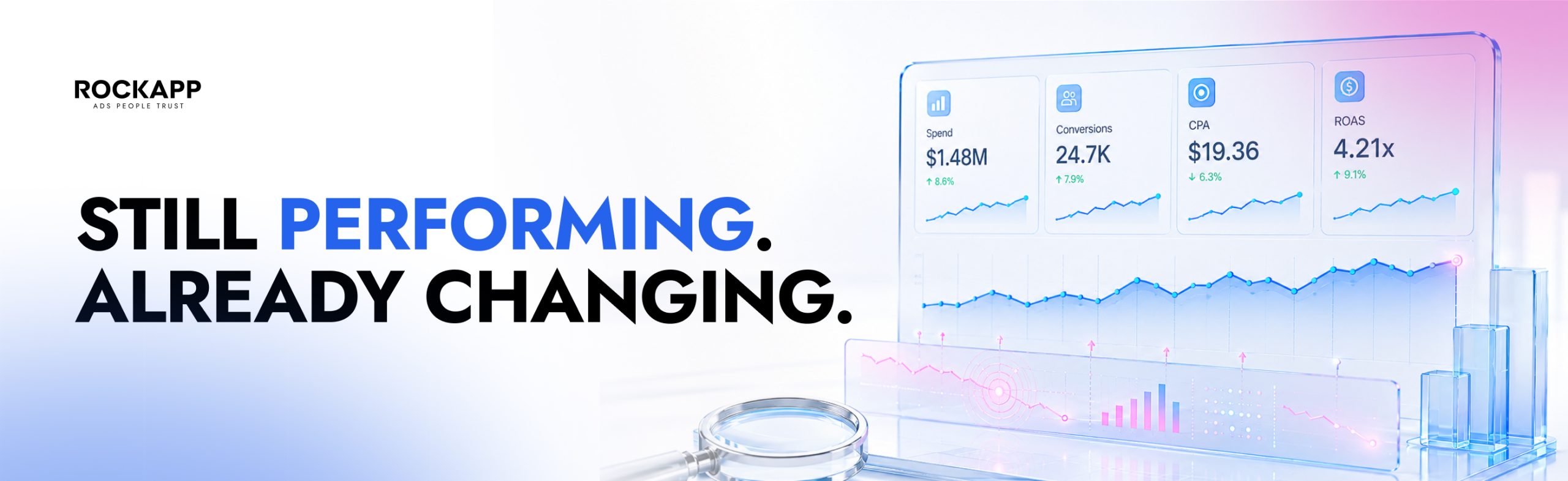
Every media buying team has campaigns they remember long after they stop running. Some delivered exceptional results for months. Others became the benchmark for every new launch that followed.
The natural reaction is to keep improving what already works. Teams test new creatives, adjust bidding strategies, expand into new audiences, or increase budgets in the hope of extending the campaign's success. Sometimes these changes buy more time. Sometimes they only delay a much bigger decision.
The most experienced teams recognise that every successful campaign eventually reaches a point where optimisation delivers smaller improvements than rebuilding the system around it. The challenge is that this turning point rarely arrives overnight. It develops gradually through dozens of small signals that are easy to overlook while performance still looks healthy.
Understanding those signals has become one of the most valuable skills in modern user acquisition. As we discussed in our previous article, many of the factors shaping campaign performance now sit outside the advertising account itself. Product changes, attribution quality, creative production, market conditions, and traffic diversification all influence how long a campaign can continue producing consistent results. When several of those elements begin shifting at the same time, experienced teams change direction long before performance collapses.
The First Changes Are Easy to Miss
Campaign performance doesn't change in a single day. In most cases, the shift happens gradually while the overall numbers still look healthy. Daily reports continue meeting expectations, budgets keep flowing, and there is little reason to believe anything has fundamentally changed.
The first signs usually appear inside the optimisation process. Creative tests produce smaller improvements than they used to. Scaling requires more manual adjustments. Winning concepts stay effective for shorter periods, and campaigns become increasingly dependent on a smaller group of audiences, placements, or traffic sources.
Many of these changes look insignificant when viewed separately. Together, they reveal something much more important. The conditions that originally made the campaign successful are evolving, and the acquisition system is beginning to respond differently.
Experienced teams pay close attention to these early signals. They understand that campaign performance reflects the broader environment around it. Market competition changes, user behaviour evolves, advertising platforms update their algorithms, and products continue developing. Each of these factors influences campaign efficiency long before CPA or ROAS clearly reflects the shift.
Adaptability Shapes Long-Term Performance

Several years ago, a successful campaign could remain stable for a long period with relatively small adjustments. Today, the pace of change is much higher. Advertising platforms update their optimisation models, user behaviour shifts, competition grows across auctions, and new privacy requirements continue influencing campaign performance.
As a result, media buying has become a continuous process of adaptation. Teams review performance more frequently, test new acquisition approaches, expand into additional traffic sources, and revisit campaign structures much sooner than before. Maintaining strong results depends on how quickly these decisions are made.
This shift has affected the market itself. Over the past year, many performance teams have reduced their operations or left certain channels because maintaining previous results became increasingly difficult. At the same time, the teams that continue growing share one common characteristic. They adapt quickly, build new workflows when conditions change, and avoid relying on a single successful setup for too long.
Campaign optimisation still matters. However, long-term performance increasingly depends on how effectively a team responds to changes happening outside the campaign itself.
Diversification Changes the Way Teams Make Decisions
When campaign performance begins to shift, the available options depend on the acquisition system a team has already built.
A team working with a single traffic source often has a limited set of decisions. Most efforts stay focused on extending the life of the existing campaign through creative testing, bidding adjustments, or audience expansion. These actions remain valuable, although they all operate within the same ecosystem.
Teams managing acquisition across multiple channels approach the situation differently. They compare traffic quality across platforms, redistribute budgets, validate new hypotheses, and identify where fresh opportunities are emerging. Every additional traffic source adds another perspective on user acquisition and creates greater flexibility when market conditions change.
This is one of the reasons diversification has become such an important part of performance marketing. It reduces dependence on a single platform and gives media buying teams more ways to respond as auctions, algorithms, or audience behaviour evolve.
For companies investing in mobile acquisition, diversification is no longer limited to expanding budgets. It also means developing expertise across different environments. Teams that understand both web and in-app ecosystems can evaluate opportunities more objectively, choose the right channel for each growth stage, and adjust their acquisition strategy as market conditions continue to change.
Knowing When to Move On

One of the biggest mistakes in media buying is assuming that every successful campaign can return to its previous performance with enough optimisation. Sometimes that happens. In many cases, however, the market has already changed, the audience has responded differently, or the acquisition system has reached a point where further adjustments deliver diminishing returns.
Experienced teams recognise this moment earlier because they look beyond campaign metrics. They evaluate traffic quality, creative performance, source diversification, market dynamics, and the stability of the acquisition system as a whole. These signals help determine whether a campaign still has room to grow or whether it is time to invest in a new direction.
This way of thinking has become increasingly important as user acquisition grows more complex. In our previous article, Growth Teams Are Managing Risk Before They Find Winners, we explored how experienced teams reduce uncertainty across the entire acquisition process rather than focusing on campaign optimisation alone. The same principle applies here. Campaign performance is one part of a much larger system, and better decisions come from understanding how all of its components work together.
The strongest media buying teams continue delivering results because they treat change as part of the process. They adapt quickly, diversify traffic sources, and recognise the right moment to shift their strategy. Campaigns may reach their limits, but a well-built acquisition system continues creating new opportunities for growth.
Conclusion
Every successful campaign eventually reaches a point where the next stage of growth requires a different approach. Recognising that moment has become one of the most valuable skills in modern media buying.
Campaign performance is influenced by far more than creative quality or bid adjustments. Market conditions evolve, competition changes, audiences respond differently, and advertising platforms continue refining their optimisation models. Looking at campaign metrics alone no longer provides the full picture.
This is why experienced growth teams pay equal attention to the acquisition system behind the campaign. They monitor early performance signals, diversify traffic sources, and continuously adapt their strategy as conditions change. These decisions make it easier to move forward with confidence when a campaign reaches its natural limit.
The question is no longer how long a successful campaign can keep performing. The more valuable question is whether your team is already building the next opportunity before today's performance begins to slow.