



 Guides
Let’s imagine. You open TikTok and see how someone buys a luxury car after “making the right move.” A few scrolls later - another version of the same story.
Different people, different products, almost identical emotional setup. The same confidence, lifestyle signals and promises of success.

Examples of publicly available TikTok content. Source: TikTok.
All images are shown for commentary and illustrative purposes. Rights belong to their respective owners.
This pattern repeats across almost every competitive vertical once acquisition reaches scale. The bigger campaigns become, the more similar they start looking. And this goes far beyond creatives.
Audiences, optimization models, bidding behavior, and even product decisions slowly start converging around the same patterns.
At first glance, this looks like creative copying. In reality, it is usually a scaling problem. Once multiple companies compete for the same users inside the same algorithms, acquisition systems gradually start optimizing toward the same outcomes.
Scale pushes everyone into the same auctions
At smaller budgets, teams can survive inside isolated pockets of efficiency.
A campaign may work because:
- competition inside a GEO is still manageable
- the audience is not saturated yet
- the creative still feels fresh
- algorithms have enough flexibility to find cheap conversions
As budgets grow, that flexibility disappears.
Meta, TikTok, DSPs, and SDK networks all optimize toward similar behavioral signals:
- probability of conversion
- retention potential
- payment behavior
- engagement patterns
Over time, multiple advertisers start competing for the same users.
The result is predictable:
- audience overlap increases
- auctions become more expensive
- delivery starts concentrating around similar user profiles
- campaigns begin resembling each other
This is one of the least discussed side effects of scaling.
The larger acquisition becomes, the narrower the system starts behaving.
Creative convergence happens naturally
Most teams do not intentionally decide to make identical ads. The market pushes them there. Once a creative concept proves scalable, it spreads through the ecosystem extremely fast. Because scaled acquisition rewards predictability.
A creative that already demonstrates:
- stable CTR
- stronger engagement
- lower acquisition costs
- better conversion behavior
immediately becomes reference material for the rest of the market.
This is especially visible in highly competitive verticals:
- mobile gaming
- betting
- fintech
- e-commerce
- subscription products
Over time, creatives stop functioning like branding assets. They become auction tools. That changes the entire logic behind production. The goal is no longer originality alone.
The goal becomes:
- faster testing
- faster iteration
- lower creative fatigue
- stronger auction performance
And this creates a feedback loop: successful patterns get copied → copied patterns become market standards → algorithms optimize toward those standards even more aggressively.
When creatives become bigger than the product
One of the clearest examples came from the mobile gaming market.
Games like Gardenscapes and Homescapes popularized “pull-the-pin” and puzzle-style creatives that spread far beyond their own products.
What made this interesting was not the ads themselves. It was what happened afterward.
The creatives became so successful that entire categories of mobile games started reproducing the same mechanics - even when those mechanics barely existed inside the actual gameplay.
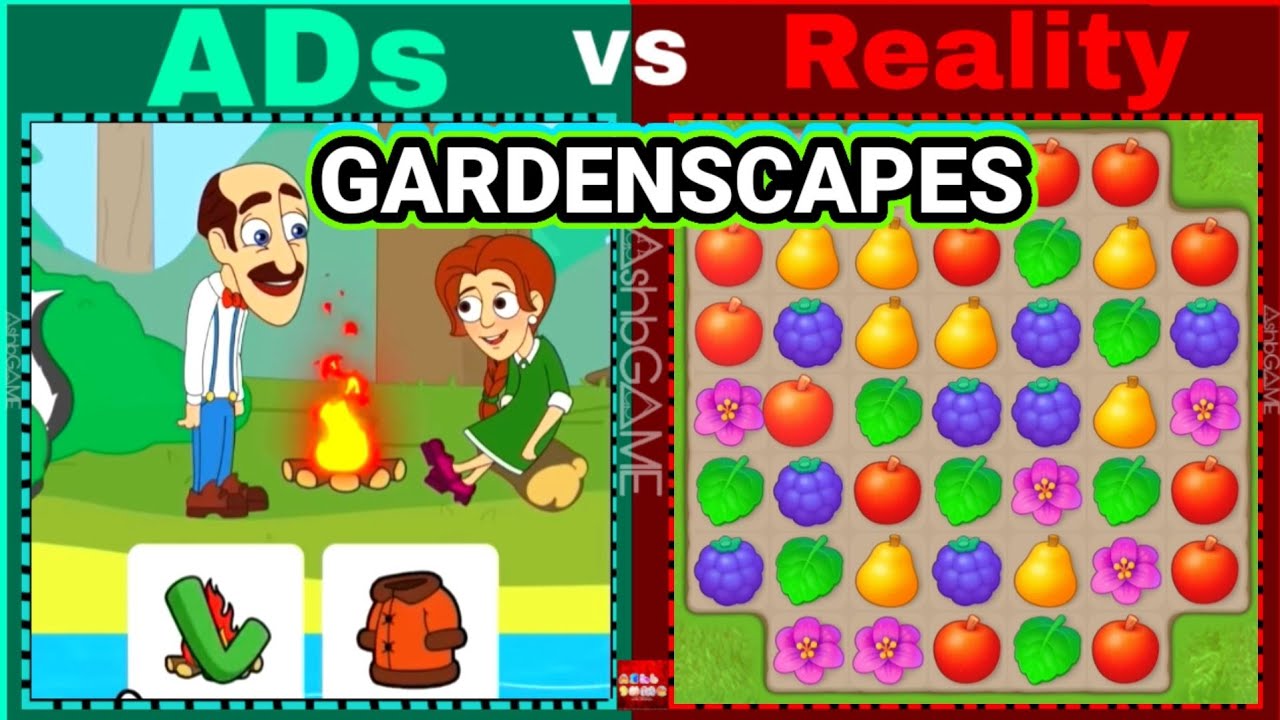
At some point, the ads themselves started shaping product decisions.
Developers realized something uncomfortable: users were often responding more strongly to the advertising concept than to the original gameplay loop.
Some products eventually began integrating ad-inspired mechanics directly into the real game experience.
Another major example came from the strategy game category.
Games like Last War: Survival originally followed the classic 4X formula - base building, resource management, timers, and long progression loops.
But the ads told a completely different story.
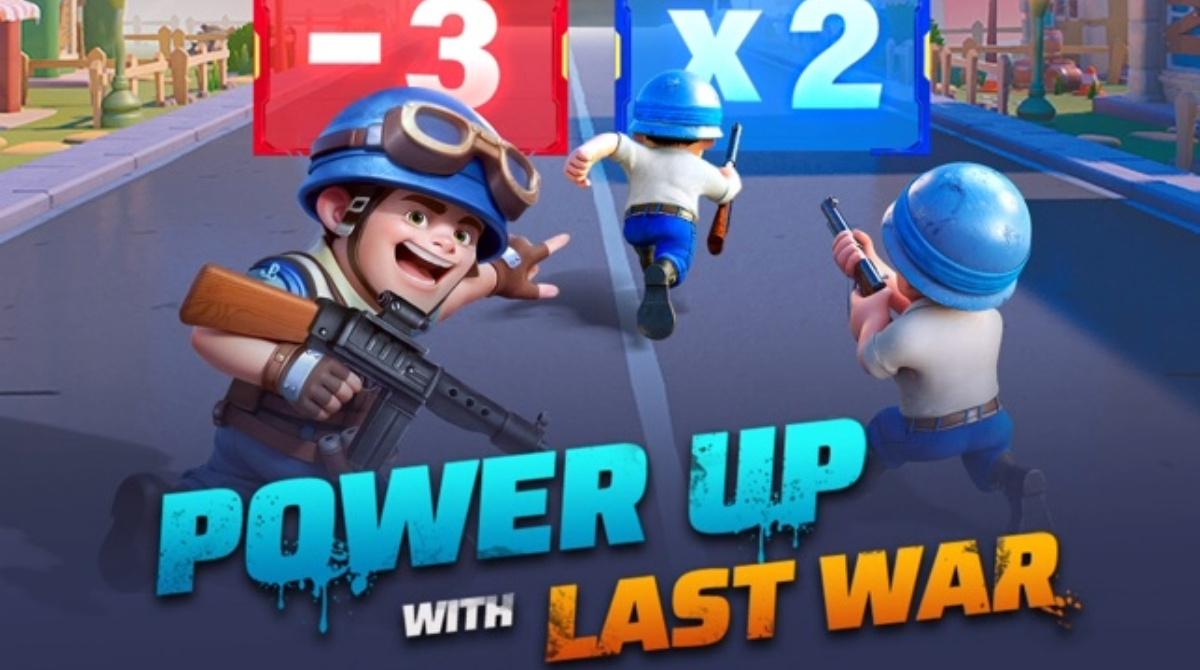
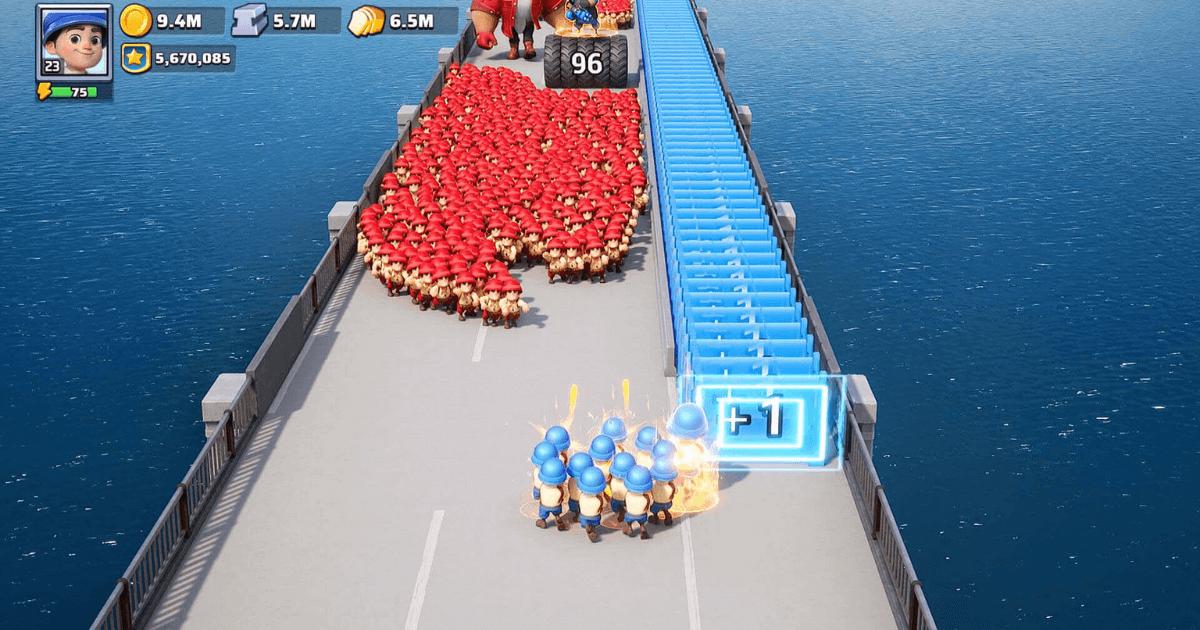
The creatives focused on fast action:
- shooting zombies
- running through mathematical gates
- multiplying army size in seconds
- immediate visual progression
The format generated extremely strong engagement and CTR across social and In-App channels.
Eventually, the advertising concept became so successful that the product itself started adapting around it.
Today, new users entering the game experience see gameplay heavily influenced by the original acquisition creatives before transitioning into the deeper strategy layer later in the funnel.
At this point, the creative was no longer promoting the product. It started shaping the product itself. This created an unusual reversal. Traditionally, creatives were designed to represent the product.
Now products increasingly adapt themselves to the acquisition mechanics that perform best inside the auction.
This was one of the clearest moments where the market exposed a deeper truth about large-scale acquisition: creative performance can influence product evolution itself.
And this did not happen only in gaming.
The same pattern appears across multiple verticals:
- finance apps start using similar “success transformation” narratives
- betting products repeat identical emotional triggers
- e-commerce brands reproduce the same UGC structures
- subscription apps recycle the same before/after psychology
At scale, successful acquisition patterns spread faster than product differentiation.
Why product quality eventually decides everything
A strong creative can temporarily outperform a mediocre product. At smaller scale, this happens constantly.
But large-scale acquisition eventually exposes the difference between creative performance and product strength.
If two products run nearly identical creative strategies, the stronger product usually absorbs the advantage over time.
Because the real scaling signals appear later:
- retention
- payer behavior
- repeat activity
- LTV
- conversion consistency
The creative may generate the click. The product determines whether the economics survive. This is why some campaigns continue growing even with relatively simple creatives, while others collapse despite strong CTR and cheap installs.
At higher volumes, algorithms become increasingly sensitive to downstream behavior. And once that happens, product quality starts shaping acquisition performance more than creative novelty alone.
AI accelerated the process
AI tools made creative production dramatically faster. Concept iteration that previously took weeks now happens in hours. Markets react to trends almost instantly. The same hooks, editing styles, emotional triggers, and visual structures spread across the ecosystem at unprecedented speed.
But AI did not create creative convergence. Scale did.
AI simply accelerated replication.
The deeper reason campaigns start looking identical comes from the structure of modern acquisition itself:
- the same algorithms
- the same auctions
- the same optimization goals
- the same competition for high-value users
The larger the system becomes, the harder it becomes to stay visually and operationally unique.
This dynamic becomes even more visible when looking at how modern advertising auctions operate. As we explored in our article The Auction Is the Strategy: Why Media Buying in 2026 Is No Longer About Sources, acquisition systems increasingly optimize around the same signals, inventory pools, and user behaviors. Creative convergence is often a downstream effect of that broader auction logic.
The hardest thing to copy is no longer the creative
Single creatives get replicated quickly. Audience pockets disappear. Winning concepts spread across the market within days.
At scale, sustainable advantage starts coming from things competitors cannot reproduce immediately:
- stronger products
- faster operational cycles
- deeper funnel understanding
- better monetization
- cleaner signal quality
- stronger creative systems
The market still rewards strong ads.
But long-term acquisition performance increasingly depends on what happens after the install.
And that is usually where identical campaigns start separating from each other.